
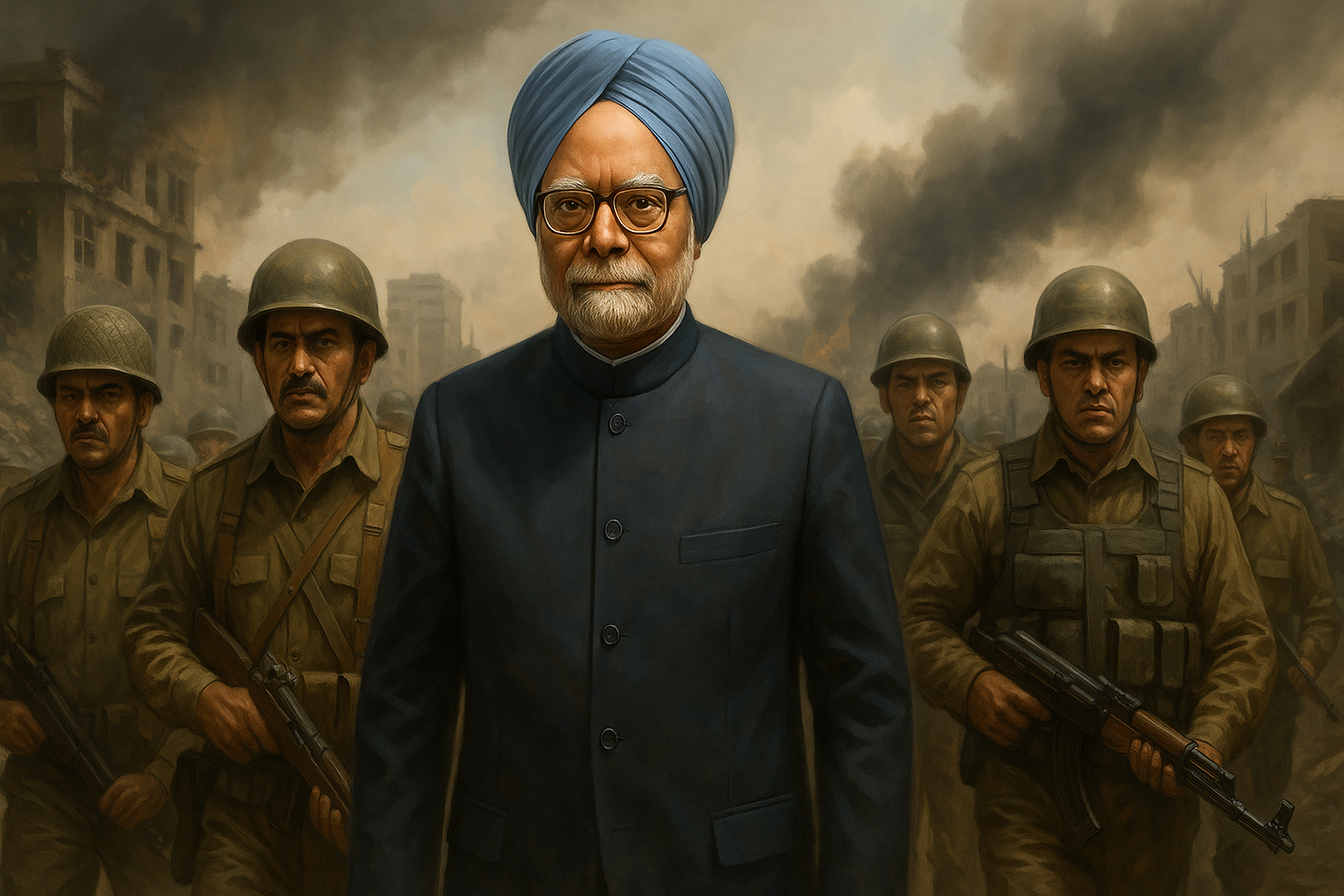
In the flurry of tweets and WhatsApp forwards, a question often surfaces these days: “What did the Manmohan Singh government do after the 26/11 attacks?” It is posed not out of curiosity, but with a clear intent to paint a narrative that the then United Progressive Alliance (UPA) government was soft or inactive in the face of terror. But the truth, as history records it, tells a very different story.
On the night of November 26, 2008, when ten heavily armed terrorists from Pakistan held Mumbai hostage, the Indian state acted swiftly. Within hours, National Security Guard (NSG) commandos were mobilized from Delhi. Operation Black Tornado was launched, and by November 29, all ten attackers were either killed or captured. The most significant capture was that of Ajmal Amir Kasab, whose arrest provided irrefutable evidence of Pakistan’s direct involvement.
What followed was a dignified and determined pursuit of justice. Kasab was given a fair trial in accordance with Indian law. He was convicted in 2010 and executed in 2012. This was not just legal closure but a message to the world that India, even in its darkest moments, does not compromise on the rule of law.
The UPA government also initiated a global diplomatic offensive. Foreign Minister Pranab Mukherjee reached out to world powers with comprehensive dossiers. The result was swift. The United Nations designated Lashkar-e-Taiba and its chief Hafiz Saeed as global terrorists. Even countries traditionally sympathetic to Pakistan were compelled to acknowledge the depth of India’s case.
Back home, the government took steps that reshaped India’s counter-terrorism landscape. The National Investigation Agency (NIA) was established. The Unlawful Activities (Prevention) Act was strengthened.
Coastal security was enhanced. Intelligence-sharing mechanisms were overhauled. These weren’t headline-grabbing moves, but they were vital in ensuring that a tragedy like 26/11 would not recur with the same magnitude.
Importantly, there was no attempt to communalise the incident. Indian Muslims were not vilified. The government stood firm against hate-mongering and focused its energy on the actual perpetrators. This calm, responsible approach kept the country united during a period of grief and fear.
The UPA leadership also demonstrated rare political accountability. Union Home Minister Shivraj Patil resigned, followed by Maharashtra Chief Minister Vilasrao Deshmukh and Deputy Chief Minister R R Patil.
Such gestures, though symbolic, reflected a government willing to accept responsibility.
Today, when some voices cry out for performative aggression and theatrics, it is essential to remember that true strength lies in restraint, resolve, and results. The UPA government did not seek applause. It sought justice. And it delivered it quietly, effectively, and within the bounds of democracy.
What did Manmohan Singh do after 26/11? He ensured that the terrorists were eliminated, the guilty were prosecuted, the world stood with India, and the country emerged more secure and more united.
Facts may not shout. But they endure
